Meta Platforms will give every shareholder one new Class C share, which carries no vote, for each Class A or Class B share they own, according to an information statement filed with the U.S. Securities and Exchange Commission on 21 October 2026. Mark Zuckerberg may sell 20% of the Class C shares he receives straight away, and the filing says one reason is so he can pay California’s proposed billionaire tax, Proposition 40, if voters approve it on 3 November.
Prop 40 would charge a one-time 5% tax on the net worth of billionaires who lived in California on 1 January 2026 (see our post on the Prop 40 vote). It is a rare public case study in how a founder raises cash without giving up control.
Update, 4 November 2026: Californians voted on 3 November, and early, unofficial returns put Prop 40 behind, with 43.6% yes and 56.4% no and about half of the projected votes counted, according to the Secretary of State’s count as reported by San Jose Inside. The Associated Press had not called the race on the morning of 4 November. Meta’s filing says the Class C dividend will be paid whatever the result.
What Meta Filed on 21 October
Meta’s board approved the plan on 19 October, on the recommendation of a special committee of independent directors: Robert Kimmitt (chair), Charles Songhurst and Tony Xu. The next day, holding companies in the Chan Zuckerberg group with about 56.1% of the votes approved it in writing, so no shareholder meeting will be held. An information statement is what a U.S.-listed company sends shareholders in that case, instead of asking for votes.
The new charter takes effect on 19 January 2027, and the dividend must be paid within five business days. The filing says the new class gives Meta “the critical ability to raise equity capital” for AI investment without diluting votes; the shares can also fund staff pay and acquisitions.
How Dual-Class Shares Split Votes From Value
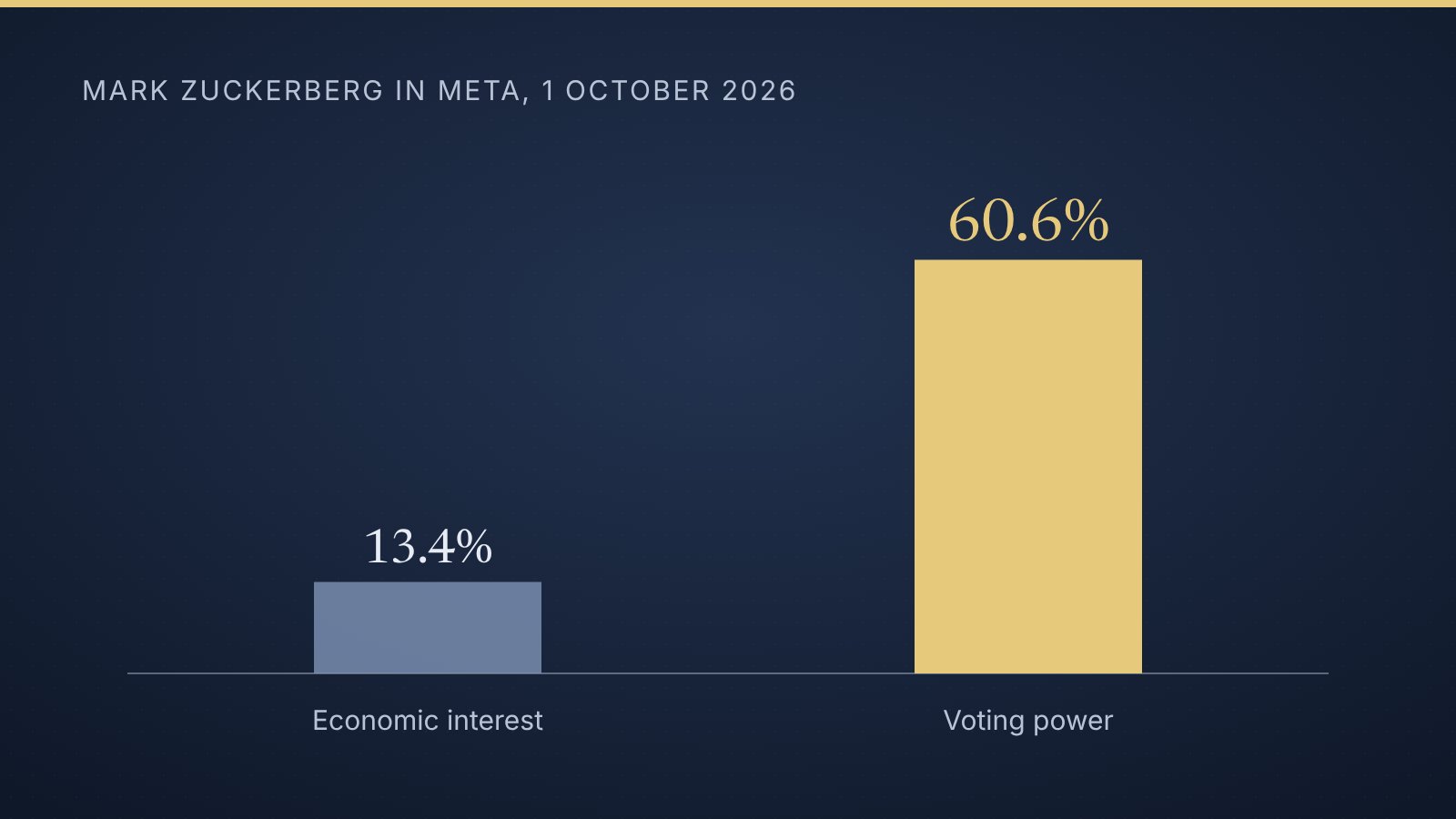
Meta already has two share classes. Class A shares, the ones that trade, have one vote each. Class B shares, held mainly by Zuckerberg, carry ten times the voting power. As of 1 October 2026 he held about 13.4% of Meta’s economic interest but about 60.6% of the votes. Zuckerberg turned down the committee’s proposal for a sunset, a point when the extra votes would lapse.
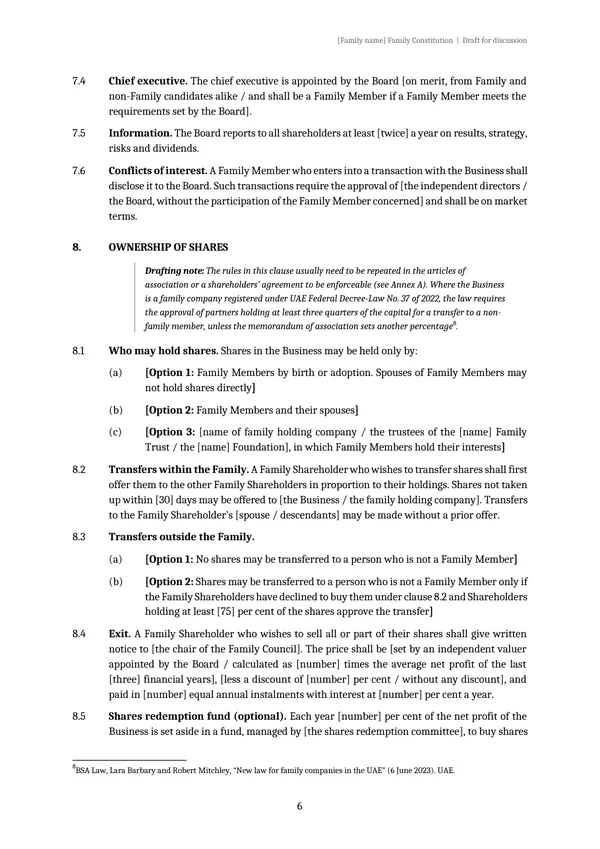
The weak point for a founder is that votes and money travel together. To raise cash, he must sell the shares that carry his votes or borrow against them, as with Larry Ellison’s pledged Oracle shares. The filing says the tax would “require him to sell shares, or at least borrow against them,” and that on 8 July Zuckerberg told Kimmitt that Prop 40 could cut his voting interest to about 53%.
A non-voting share solves this. Class C shares will rank equally, per share, with Class A and B for dividends, in a liquidation and in a merger, but carry no vote. Selling them sells value only. Families in Europe use other tools, such as the Arnaults’ Agache SCA structure for LVMH.
The 20% Zuckerberg Can Sell, and the 80% That Is Stapled
- 20% is free. Zuckerberg and certain permitted transferees can sell up to 20% of the Class C shares they receive “for any reason”, including a Prop 40 tax bill.
- 80% is “stapled”. Each stapled share can be sold only if, within two business days, the group also sells one Class A or Class B share or converts one Class B share into Class A. Selling a stapled share still costs votes.
- Release over at least eight years. At the end of each calendar quarter in which Zuckerberg works full time on Meta’s executive team or as executive chair throughout, 2.5% of his dividend shares are unstapled. After 32 such quarters, all are free. A missed quarter delays the release but forfeits nothing.
What Zuckerberg Gave in Return
Under a Founder Alignment Agreement signed on 20 October, Zuckerberg committed, for eight years and while he stays in that role, to remain a resident of California or of whichever state hosts Meta’s headquarters, absent “material unforeseen circumstances.” The committee wanted him leading from California, close to Meta Superintelligence Labs.
On 4 August, the filing says, Zuckerberg proposed 20 Class C shares for every existing share and said he intended to establish residence outside California before the vote. The committee called that “excessive” and offered a dividend paid only if Prop 40 became law; a member of management warned such a contingent dividend would likely carry a significant liquidity discount. The final terms: one-for-one, paid whatever the vote, plus the residency promise.
He takes no new pay; his salary stays at $1. Instead, all shareholders get a further one-for-one Class C dividend each time the 30-day average Class C price reaches two, then four, then eight times Meta’s Class A price of $580.60 on 10 September 2026, adjusted for this dividend, if shareholder returns since that date average at least 10% a year.
Facebook Tried This in 2016
In April 2016 Facebook proposed two non-voting Class C shares for every existing share, so Zuckerberg could give away most of his stock while keeping control. Two days later a shareholder sued in the Delaware Court of Chancery, arguing that a board committee “did not bargain hard,” Reuters reported. In September 2017, before Zuckerberg was due to testify, Facebook dropped it. Google had gone first: it settled a similar lawsuit in 2013 and issued non-voting Class C stock in 2014.
The 2026 version answers that criticism with process: a committee formed in February with its own financial adviser, Moelis, a rejected first offer, and the stapling rule.
A fair caveat
Prop 40 was trailing in early returns on 4 November, and the dividend will be paid either way. The filing warns that Class C shares “will likely trade at some level of discount” to Class A and that the deal could prolong Zuckerberg’s control. Class A holders get no separate vote. Our account of the talks comes from Meta’s own filing.
Five lessons to take away
- Votes and value can travel separately. A non-voting class lets a founder raise cash and keep control.
- A wealth tax is a cash problem. Paper wealth is taxed in money, so someone must sell or borrow.
- Limits buy acceptance. Stapling 80% of the new shares ties the founder’s cash to his continued work.
- Process matters. An independent committee and a rejected first offer answer the criticism made in 2016.
- Control can come with promises. Here the price was eight years in one state and no new pay.
Questions to bring to your advisors
If a tax bill or a family need required cash tomorrow, what could we sell without weakening control? Do our company’s articles allow non-voting shares, and what would minority shareholders expect in return? These are questions to bring to your lawyers and tax advisors, not advice.