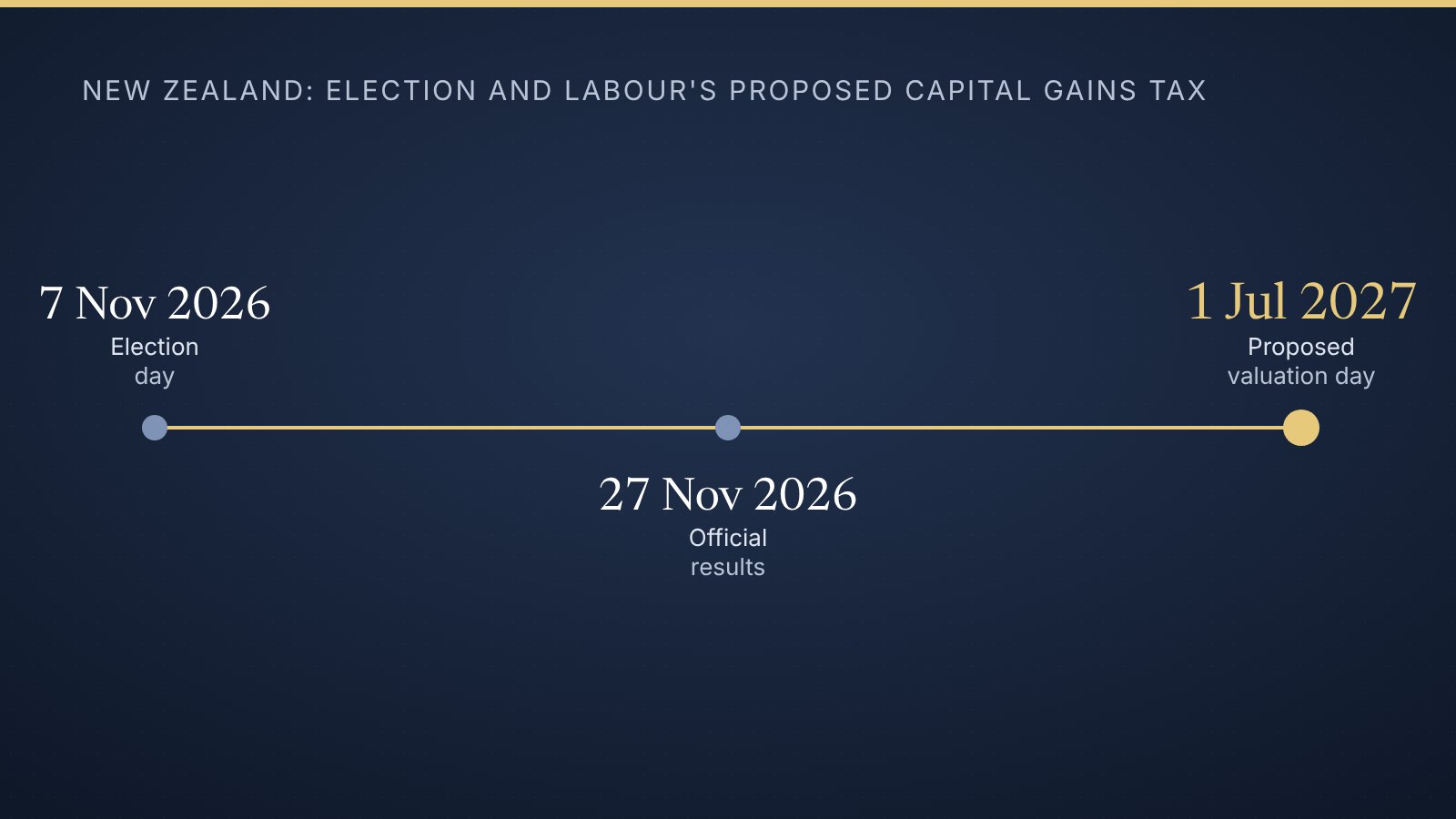
New Zealand’s opposition Labour Party is campaigning on a 28% tax on gains from selling residential investment and commercial property, with the family home, farms, shares and businesses left out. Only gains made after 1 July 2027 would be taxed. New Zealanders vote on 7 November 2026, so this is a campaign promise, not a law.
How New Zealand Taxes Property Gains Today
New Zealand has no comprehensive capital gains tax. The main rule for property is the bright-line test: Inland Revenue taxes the profit on residential property sold within two years of purchase (for sales from 1 July 2024). A person’s main home is generally excluded.
What Labour Proposes
According to Labour’s policy page, the tax would apply to commercial property and residential investment property, and only when it is sold. The rate, 28%, matches the company tax rate. Excluded:
- the family home (including lifestyle blocks) and farms;
- shares, businesses and business assets, and KiwiSaver retirement savings;
- inheritances and gifts, and personal items such as cars, boats and art.
1News adds that holiday homes would be taxed and mortgage interest could not be deducted.
How the start date works. 1 July 2027 is “valuation day”. Each property’s base is the higher of its purchase price and its value on that day, by default its rateable value, or a registered valuation. 1News gives an example: a commercial building bought in July 2025 for NZ$400,000, worth NZ$600,000 on valuation day and sold for NZ$700,000. Only the NZ$100,000 gain is taxed: at 28%, NZ$28,000 (our calculation).
Labour would spend the money on health, including three free doctor’s visits a year. 1News reports Labour’s estimate of NZ$700m a year on average.
What the Other Parties Say
The governing National Party has repeatedly ruled out a capital gains tax, 1News reports. In October 2025, ACT called the plan “divisive” (RNZ). According to 1News, the Greens have different plans: a 2.5% yearly tax on net wealth above NZ$10m, a 33% tax on inheritances and gifts above NZ$1m, and a 10-year bright-line test, and Labour says it will not adopt them.
What It Means for a Family
The plan targets property, not financial wealth: listed shares and family businesses would be outside it, while commercial buildings and rental homes would be inside. Neither Labour’s page nor the 1News explainer says how trusts or companies would be treated, which matters for families using trusts and holding companies. Elsewhere, Ireland is cutting its CGT rate while Hungary drafts a wealth tax.
We will update this post after the election.
What to watch
- Preliminary results on election night, 7 November, and official results on 27 November.
- Coalition talks, and where each possible partner stands on a capital gains tax.
- If Labour leads a government, the draft law and how it treats trusts and companies.
A fair caveat
This is a party proposal, and details could change in coalition talks or drafting. Revenue figures are party estimates. We do not predict the result.
Questions to bring to your advisors
How do we hold our New Zealand property, and how would each party’s plan treat that structure? What valuation records would we need? These are questions to bring to your lawyers and tax advisors, not advice.