Sun Life Asia’s latest research on family businesses, reported by WealthBriefingAsia on 27 October 2026, finds that 78% of family-business respondents across Asia say the next generation is willing to take over, yet only 26% have a fully developed succession plan. Where heirs hold back, lack of preparation or experience is now the most cited reason reported. As David Broom, chief client and distribution officer at Sun Life Asia, put it: “willingness and readiness are different things.”
What Sun Life Asia’s research found
According to WealthBriefingAsia’s report:
- Willing vs planned: 78% say the next generation is willing to take over; only 26% have a fully developed succession plan.
- Why heirs hold back: among families whose heirs are not fully willing, 39% cite a lack of preparation or experience, up from 28% in 2025. Lack of interest fell to 34% from 43%, and a wish to sell or cash out to 12% from 22%.
- Fair or equal: two-thirds say a fair division of wealth does not always mean an equal one.
Hong Kong and Singapore: different answers
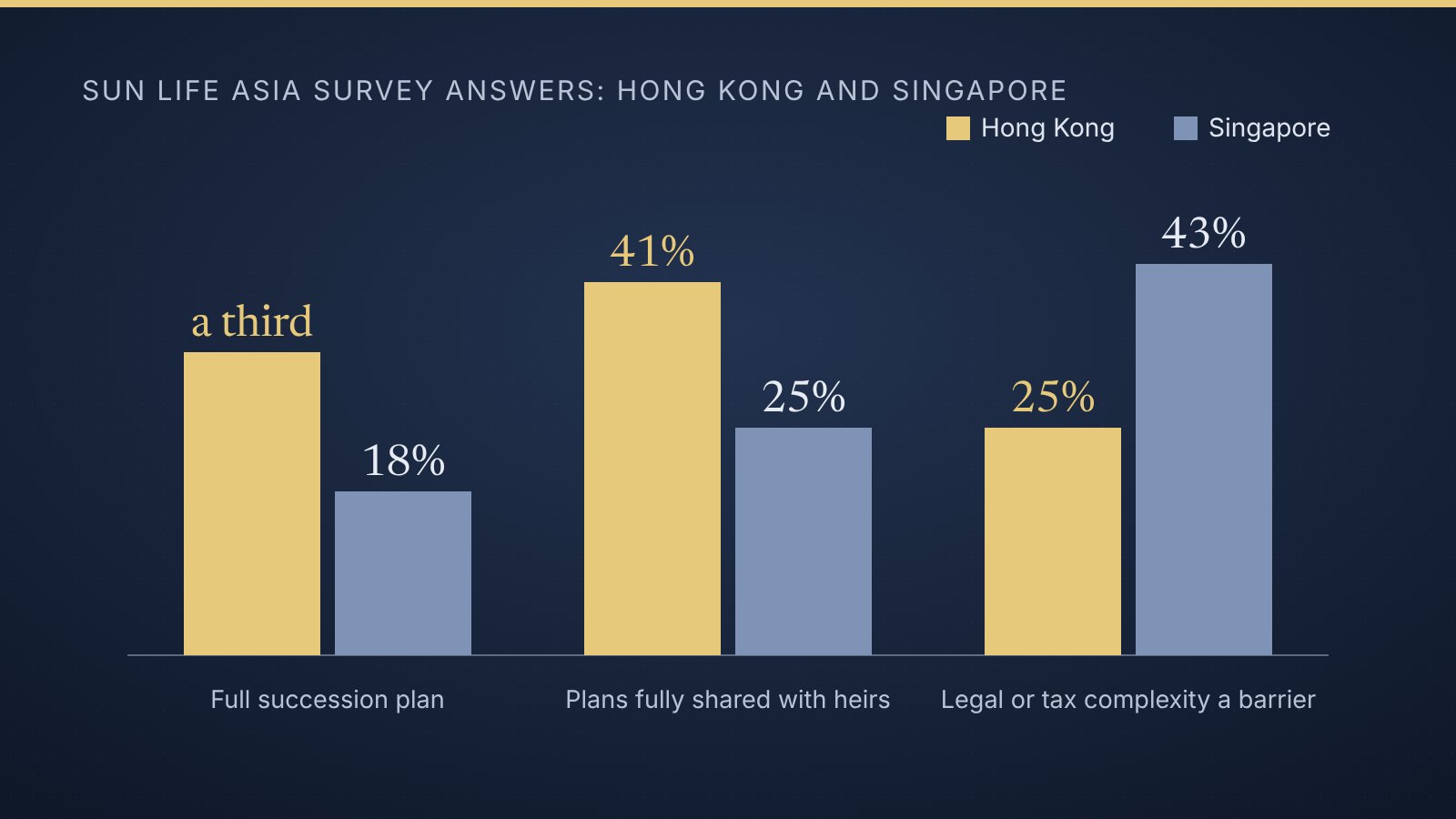
A third of Hong Kong respondents have a fully developed succession plan, against 18% in Singapore. In Hong Kong, 41% have fully communicated their legacy plans to heirs, against 25% in Singapore. Singapore respondents were more likely to name legal or tax complexity as a barrier (43% against 25%). These are survey answers, not a verdict on either place; our Hong Kong and Singapore guides set out the actual rules.
Why willing is not the same as ready
A succession plan is a written answer to three questions: who will run the business, who will own it, and how and when control passes. Willingness answers none of them. Readiness takes years: outside work, a real role in the firm, decision rights handed over in stages, as our post on how families prepare heirs describes.
On fair versus equal: an equal split gives each child the same share, while a fair one may weigh who works in the business, so one heir may hold control while siblings receive other assets. A separate study of about 50 Indian business families found 36% with a documented succession plan, using a different method.
What to watch
- Whether Sun Life Asia publishes the full report, with sample size, markets and dates.
- Whether lack of preparation stays the leading reported reason in next year’s data.
- Whether other surveys find the same Hong Kong and Singapore gap.
A fair caveat
The 2026 figures come from one article, which names no report, sample size, market list or survey dates; we could not read the report itself. Sun Life’s 2025 family business survey covered 1,823 owners in six markets and grouped heirs’ reasons differently, led by a wish for independence, so the year-on-year moves may rest on different questions. Sun Life also sells insurance and wealth planning, the services these findings point toward.
Questions to bring to your advisors
Who will run our business, who will own it, and when, and is that written down? Have we told the next generation, and what training would make a willing heir a ready one? Do we mean equal or fair? These are questions to bring to your advisors, not advice.